
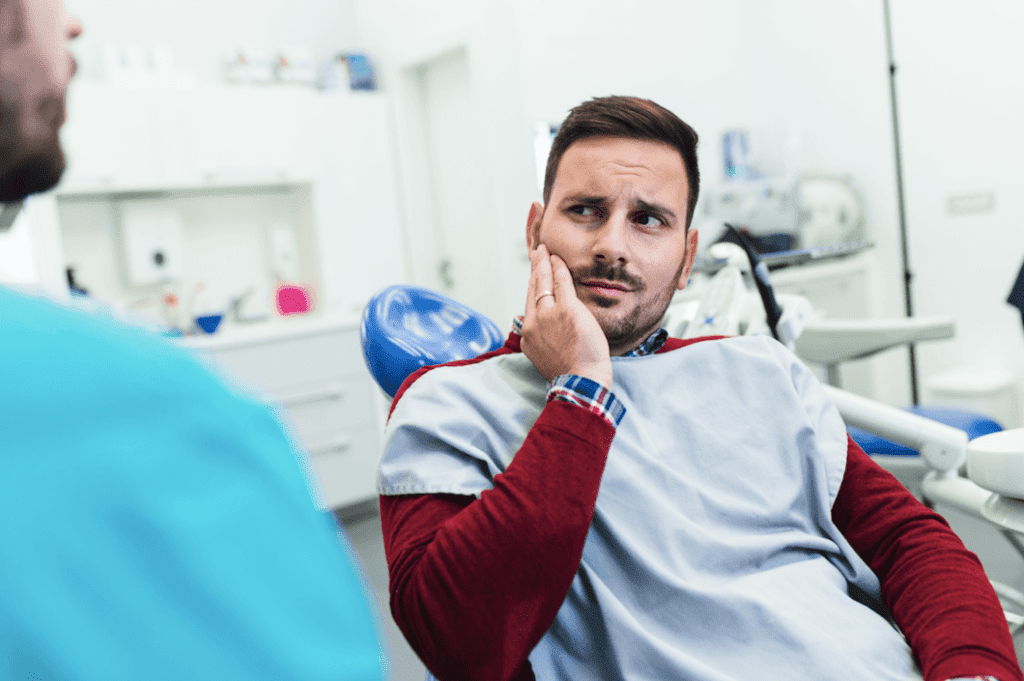
Teeth grinding, also known as bruxism, is a dental concern that affects millions of people. Dr. Paul Karpovich offers treatment for his patients that show obvious signs of bruxism at his dentist office in Timonium, MD. This may seem like a harmless habit however it can cause serious damage to your teeth, gums, and even the underlying bone. The constant pressure on your teeth can cause pain in all your dental and facial structures. Excessive grinding over time can even lead to tooth loss, recessed gums, and bone loss. Untreated tooth damage may allow bacteria to enter the tooth. This could result in a tooth abscess or a root canal.
What Causes Bruxism?
Many people don’t even realize they are doing it until they start to feel pain or their dentist notices wear on their teeth. But what actually causes bruxism?
Common causes of bruxism
Stress and Anxiety
One of the most common causes of bruxism is stress. If you are feeling worried or anxious, your body may stay tense—even when you’re sleeping. That tension can show up as clenching your jaw or grinding your teeth. This is your body’s way of reacting to stress, but over time, it can damage your teeth and jaw.
Sleep Problems
Trouble sleeping is another reason people grind their teeth. Conditions like snoring, sleep apnea, or not getting enough deep sleep can make your jaw muscles move while you sleep. Your brain may be trying to keep your airway open or respond to stress while you’re resting, which leads to grinding.
Medications and Health Conditions
Some medications, especially ones used to treat depression or anxiety, can cause bruxism as a side effect. Certain health problems are also linked to teeth grinding. Parkinson’s disease, acid reflux, or ADHD can increase the risk of teeth grinding.
Bite Problems
If your teeth don’t line up the right way when you bite down, this is called a “bad bite” or malocclusion. When your bite is uneven, your jaw muscles may work harder to try to correct the problem without you even realizing it. One way your mouth may react is by grinding your teeth together.
Lifestyle Habits
Smoking, drinking alcohol, and having caffeine, especially later in the day, can make bruxism worse. These habits affect your body in ways that make it harder for your muscles to relax. For example, nicotine from smoking is a stimulant that can increase muscle activity, which means your jaw muscles may stay tense for longer periods.
Alcohol might seem to help you relax at first, but it can actually disturb your sleep and cause more teeth grinding during the night. Caffeine, found in coffee, tea, soda, and energy drinks, is also a stimulant that can keep your body and mind awake, making it difficult for you to fully relax before bedtime.
Diagnosing Bruxism
Many people who suffer from teeth grinding do not even know they do it. This is because it often happens at night while they are sleeping. However, even if you grind your teeth while you sleep, several signs point to bruxism:
- Jaw, face, ear, or neck pain
- Worn down teeth
- Tension headaches
- Sensitive teeth
- Loose teeth
- Flattened teeth
- Damaged dental restorations
- Problems with your jaw
A dentist can easily spot the signs of grinding. This is simply another reason why regular dental appointments are very important. Dr. Karpovich will examine your teeth looking for signs of grinding which includes worn down teeth, cracked or chipped teeth, and receding gums. If you are diagnosed with bruxism, it is important to treat it as soon as possible to avoid further damage.
Bruxism Treatment in Timonium, MD
Diagnosing your bruxism is just the first step. Dr. Karpovich will need to create a treatment plan to fix your teeth and prevent further damage. Your treatment plan will depend on the severity of your grinding and the damage. In most cases, he will recommend a teeth grinding night guard.
Teeth Grinding Night Guard
A night guard is an oral appliance that we recommend for patients who grinds their teeth. It offers a conservative way to prevent damage. A night guard is a removable, custom mouth piece that is made from dental impressions.
We work with a dental lab to create night guards from high-quality, durable materials that can endure the stress of tooth grinding. This makes it superior to the weaker, over-the-counter options. We suggest wearing it every night while you sleep. Some patients even choose to wear them during high-stress situations.
Restorative Dentistry
If your bruxism has led to damaged teeth, your dentist may recommend restorative dentistry to fix them. Chipped, broken, or worn down teeth may benefit from dental crowns, tooth bonding, or dental veneers. Such treatments will add strength to the tooth and protect it from further damage.
Dental crowns are like strong caps that fit over the entire tooth. They cover and protect the damaged tooth while making it look natural again. Crowns are very durable and can help your tooth last much longer. Dr. Karpovich may recommend tooth crowns if you have extensive tooth wear.
Dr. Karpovich can repair small chips or cracks with bonding. He uses a special tooth-colored material that he shapes and hardens to fix the tooth damage. Bonding can improve how your tooth looks and add a layer of protection.
Dental veneers are thin shells that cover the front of your teeth. They hide damage and make your smile look smooth and even. Veneers can also help protect teeth worn down from grinding.
Get Relief From Your Teeth Grinding Today
If you or a family member is suffering from teeth grinding, book an appointment with Dr. Karpovich today in Timonium, MD. A simple bite analysis and oral health evaluation will help him diagnose you with bruxism. Then Dr. Karpovich can create a treatment plan to help you find relief and fix your tooth damage.
Contact our dentist office today at (410) 221-3085 or schedule an appointment online. Dr. Karpovich is proud to serve dental patients from Lutherville, Cockeysville, and the surrounding areas.